
Do We Really Need an Agency Agreement?
Posted: 15th December 2025
Posted in: Rural, Uncategorized
When I first embarked upon my real estate career 22 years ago, one of the situations I felt awkward about was asking someone to sign and enter into an agency agreement. I hated being perceived as being pushy.
This was especially the case when I had a prospective buyer seeking a certain type of property, but no matching property on my books.
In such cases, I would approach matching landowners to gauge their interest. I still do. This could be a “cold call”.
Sometimes, property owners (principals) will say, “if you’ve got someone interested, we’ll do the paperwork then”, or “we’re in no hurry, so we don’t want to be locked in”.
Surely, we can trust each other to do the right thing and honour a verbal agreement.
Sound familiar?
Now, there are very good reasons to have a formal agency agreement.
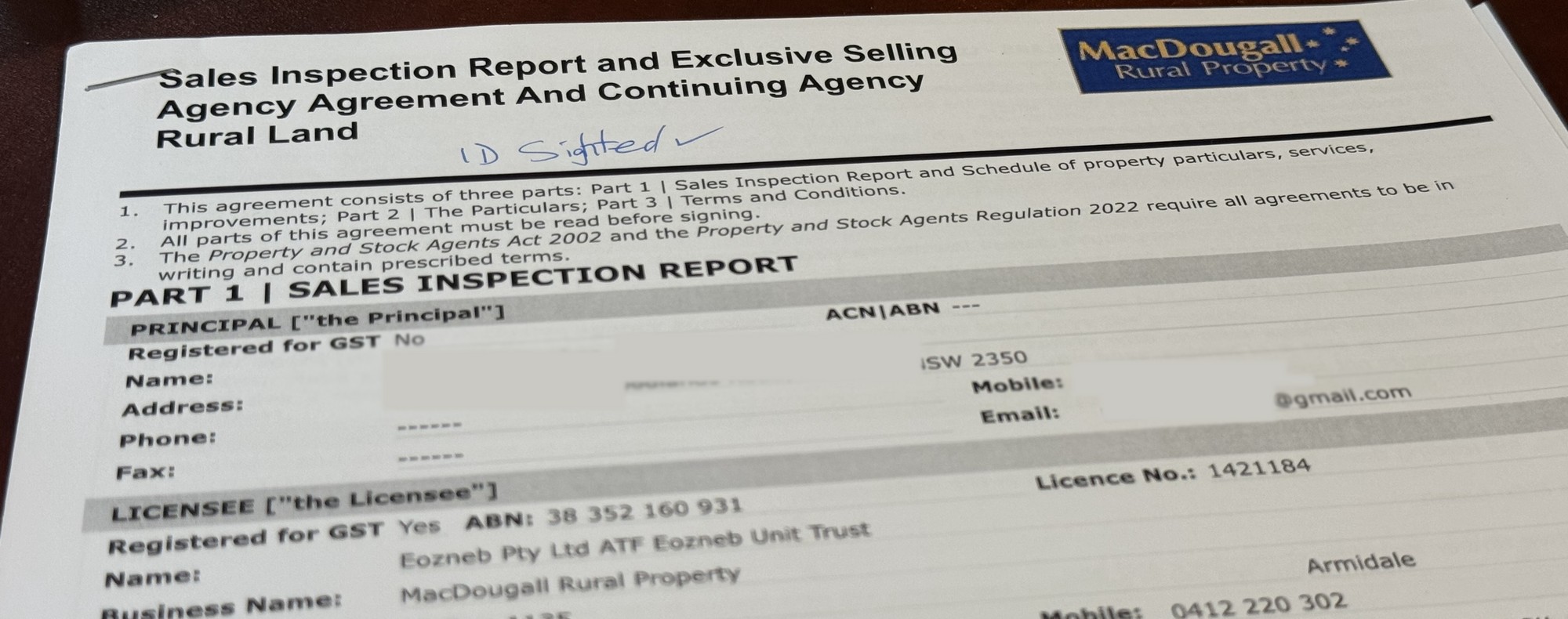
Firstly, it is the law. Before an agent can represent a vendor and their property, a signed agency agreement between the owner of the particular property and the agent must be in place. No matter how much goodwill exists between a vendor and an agent, all parties must sign off on an agreement.
Secondly, it is the most practical means of protecting the vendor, the agent and potential buyers from fourth-parties who may inadvertently or as can be the case, intentionally undermine a transaction.
It is not always about people’s mischievousness. It is about human nature. Undermining does not need to be intentional to scuttle deals.
While we’ve all heard stories of skulduggery in the real estate industry, it can often simply be yarns on the bush telegraph that eventually get to another party (agent or otherwise) who then enters the scene and the whole thing blows up.
Having an exclusive agency agreement is the strongest tool in preventing potential undermining of a sale process.
Once an agency agreement is in place, a clear line of communication is established. Anyone and everyone who wishes to inquire about and/or inspect the property has an obvious path to follow. That is, via the agent. Backdoor interference is avoided, and vendors can sleep easy knowing the agent will be across all inquiries, and outside pressure will not be applied to them.
Another important point to understand is that even when an agent has an agency agreement with a property owner, the agent is under the instruction of the owner. That is to say, you can be in an agency agreement, with all its safeguards, and still not have the property proactively promoted, if that is your instruction. This allows the agent to discuss the property with the identified prospective buyer, go through the sales process if the buyer decides to move forward, whilst not spreading the word to all and sundry. In the event the property does not sell, and bush telegraph is alerted, the property owner and agent still have the structure in place to deal with “tyre-kickers” and opportunist agents.
After having had a couple of transactions compromised by third and fourth parties, I no longer feel awkward about ensuring an agency agreement is in place with every prospective transaction.
Feel free to contact me to discuss this or any other of your real estate queries.
Best regards,
Graham MacDougall
0412 220 302